

Digital PR Steps That Help Brands Build Stronger Visibility
A strong digital PR strategy helps brands build visibility, communicate with the right audiences, and create meaningful opportunities across digital channels. However, digital PR is most effective when activities are guided by clear objectives and a structured execution plan.
From identifying your target audience and choosing the right platforms to distributing news, nurturing potential customers, and measuring results, each part of a digital PR strategy contributes to the overall effectiveness of a campaign.
In this guide, we explore 10 practical steps that can help brands build a more focused digital PR strategy, strengthen brand visibility, and improve their digital communication efforts.
What Is a Digital PR Strategy?
A digital PR strategy is a structured approach to managing a brand’s public relations activities across digital channels. It helps organizations communicate with their target audiences, build online visibility, strengthen their reputation, and support broader business objectives.
A digital PR strategy can include activities such as online media outreach, press release distribution, digital content, social media communication, influencer or industry engagement, and campaigns designed to reach specific audiences.
The goal is not simply to generate online visibility. A well-planned approach connects PR activities with clear objectives, relevant audiences, appropriate digital platforms, and measurable outcomes. This makes it easier for brands to understand what is working and improve their PR efforts over time.
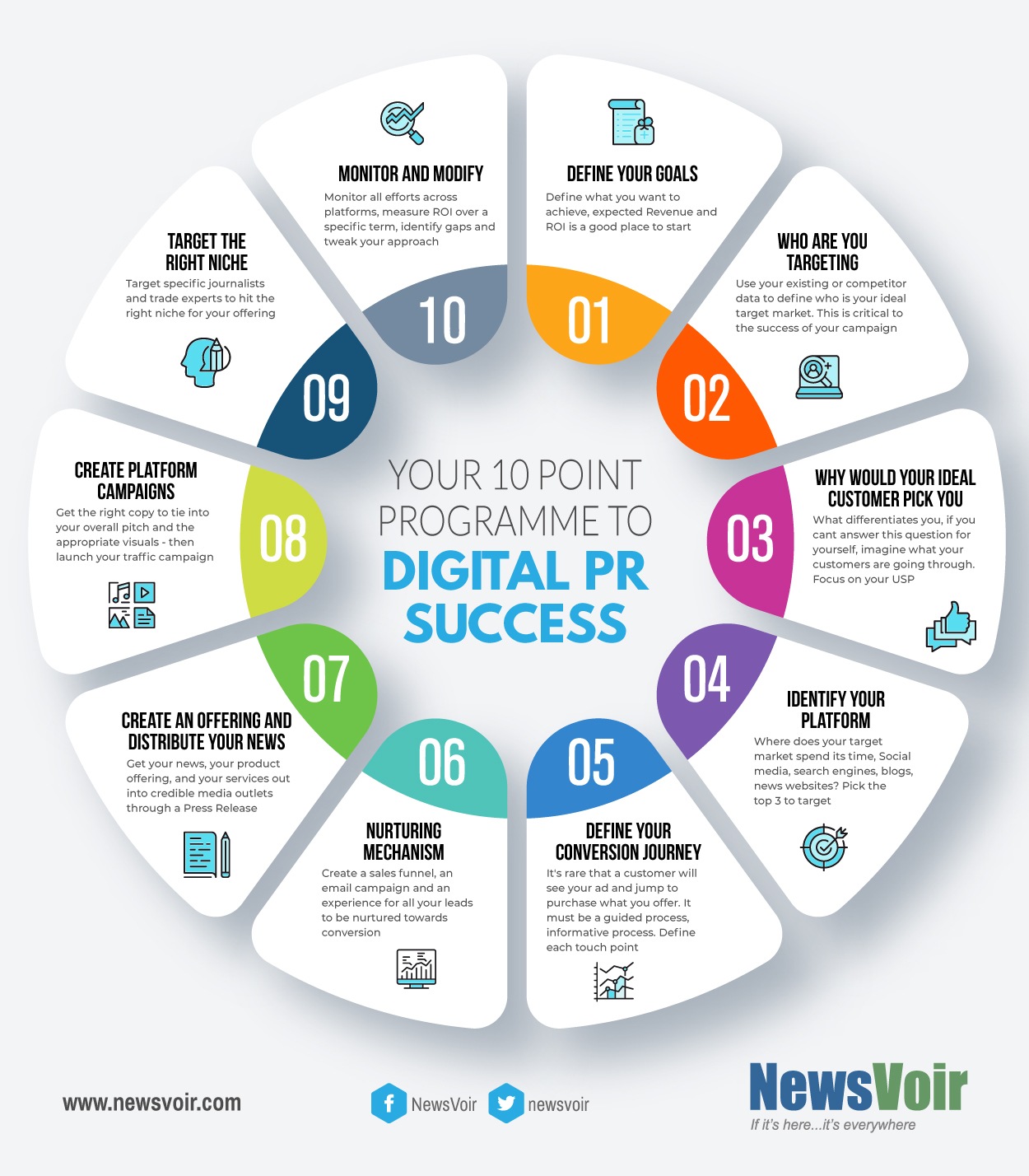
10 Steps to Improve Brand Visibility With a Digital PR Strategy
1. Define Your Goals
Start by defining what you want your digital PR activities to achieve. Your objectives could include improving brand visibility, reaching a specific audience, generating leads, supporting a product launch, or strengthening online credibility.
Clear goals also make it easier to evaluate your results. Define the outcomes you want to achieve and identify the metrics that can help you measure progress.
2. Identify Your Target Audience
Not every audience will be relevant to your brand. Identify the people you want your PR campaign to reach and understand their interests, needs, and online behaviour.
Existing customer data and competitor research can help you identify your ideal audience and choose a more focused approach for your digital PR activities.
3. Define Your Unique Value Proposition
Your brand needs a clear reason for audiences to pay attention. Identify what makes your organization, product, service, or expertise different from the alternatives available in the market.
A clearly defined unique value proposition can help you develop stronger messages and communicate your brand more consistently across digital channels.
4. Identify the Right Digital Platforms
Your target audience may not spend equal time across every digital platform. Identify where your audience is most active, whether that is search engines, social media, blogs, news websites, or other relevant channels.
Rather than trying to be present everywhere, prioritize the platforms that are most relevant to your audience and PR objectives.
5. Define the Conversion Journey
A digital PR strategy should consider what happens after someone discovers your brand. Map the journey from the first interaction with your content or media coverage to the action you want the audience to take.
Depending on your objective, this could include visiting your website, exploring a product or service, signing up for an update, downloading a resource, or making an enquiry. Creating a clear path between visibility and action can help your PR activities support broader business goals.
6. Build a Lead Nurturing Mechanism
Not every person who discovers your brand will take action immediately. A lead nurturing approach can help you maintain communication with people who have shown interest but are not yet ready to convert.
Relevant content, email communication, follow-ups, and useful resources can help keep your brand connected with potential customers. The approach should be consistent with the audience’s interests and the stage they are at in their decision-making journey.
7. Create Relevant Offers and Distribute Your News
Create content and offers that are relevant to your target audience and connected to your PR objectives. Depending on the campaign, this could include a product announcement, report, research, industry insight, event, or other newsworthy update.
Once the content is ready, distribute it through relevant digital channels and media platforms where your target audience is likely to discover it. The focus should be on reaching the right audience rather than simply maximizing the number of platforms used.
8. Build Platform-Specific Campaigns
Different digital platforms have different audiences, formats, and communication styles. Adapt your PR campaigns to suit the platform instead of using exactly the same content everywhere.
For example, a media story, social media post, email campaign, and website article may communicate the same core message but require different formats and messaging. A platform-specific approach can make the campaign more relevant and engaging.
9. Target the Right Niche
A broad digital PR campaign may not always deliver the most meaningful results. Identify the industries, communities, publications, influencers, and audience groups that are most relevant to your brand.
Focusing on the right niche can help your communication reach people who are more likely to be interested in your story, expertise, product, or service.
10. Monitor, Measure, and Modify
A digital PR strategy should be reviewed regularly to understand what is working and where improvements are needed. Track relevant metrics such as media coverage, website traffic, engagement, referral traffic, backlinks, leads, or other outcomes linked to your objectives. Use these insights to refine your messaging, channels, content, and campaign activities. Regular monitoring and modification can help your digital PR strategy become more focused and effective over time.
How to Make Your Digital PR Strategy More Effective
A successful digital PR strategy requires more than publishing content across multiple online channels. The focus should be on connecting your PR activities with clear objectives, relevant audiences, and measurable outcomes.
Start by keeping your messaging consistent across the digital platforms you use. While the format and presentation can change from one platform to another, the core brand message should remain clear and recognizable.
Focus on creating content that provides value to your audience rather than communicating only promotional messages. Newsworthy announcements, useful insights, original research, expert opinions, and relevant industry content can give audiences a reason to engage with your brand.
It is also important to build relationships with relevant media outlets, industry communities, and other digital stakeholders. Consistent and relevant communication can help strengthen your online presence and create more opportunities for visibility.
Finally, review your results regularly. Use performance data to identify which channels, content, and PR activities are contributing to your objectives, and adjust your strategy accordingly. A digital PR strategy should evolve as audience behaviour, platforms, and business priorities change.
Common Digital PR Mistakes to Avoid
A digital PR strategy can become less effective when brands focus on visibility without considering relevance, consistency, and measurable outcomes. Avoiding common mistakes can help make PR activities more focused and purposeful.
Focusing Only on Quantity
Publishing content across as many platforms as possible does not necessarily improve results. Prioritize the channels and publications that are relevant to your target audience and PR objectives.
Using the Same Content Everywhere
Different digital platforms have different audiences and formats. Simply copying the same content across every channel can make communication less relevant. Adapt the format and messaging while keeping the core brand message consistent.
Ignoring the Target Audience
A PR campaign may generate visibility but still fail to deliver meaningful results if it reaches the wrong audience. Identify the people, industries, publications, and communities that are most relevant before planning your campaign.
Relying Only on Promotional Content
Constantly promoting products or services can make it difficult to build audience interest. Balance promotional communication with useful information, industry insights, original content, and genuinely newsworthy announcements.
Not Measuring Results
Without tracking performance, it is difficult to understand whether your digital PR activities are contributing to your objectives. Monitor relevant metrics and use the results to refine your strategy over time.
Frequently Asked Questions
What is a digital PR strategy?
A digital PR strategy is a structured approach to managing public relations activities across digital channels. It helps brands build online visibility, reach relevant audiences, communicate their messages, and support broader business objectives.
Why is a digital PR strategy important?
A digital PR strategy helps brands take a more focused approach to online communication. It connects PR activities with specific audiences, digital platforms, business objectives, and measurable outcomes.
What are the key steps in a digital PR strategy?
Key steps include defining goals, identifying the target audience, establishing a unique value proposition, selecting relevant digital platforms, planning the conversion journey, nurturing leads, distributing relevant news, creating platform-specific campaigns, targeting the right niche, and measuring results.
How can digital PR improve brand visibility?
Digital PR can improve brand visibility by helping brands communicate through relevant media outlets, digital platforms, content channels, and industry communities. Reaching the right audiences with useful and relevant content can strengthen a brand’s online presence.
How do you measure a digital PR strategy?
Measurement depends on the objectives of the campaign. Relevant metrics may include media coverage, website traffic, engagement, referral traffic, backlinks, leads, and other outcomes that indicate whether the PR activities are supporting the intended goals.