


PR Writing Skills That Help You Create Stronger Stories
Effective PR writing is essential for communicating a brand’s story clearly, attracting media attention, and keeping audiences engaged. Whether you are preparing a press release, pitching a story to a journalist, or developing corporate communication, the way you present information can influence how your message is received.
Good PR writing is not about using complicated language or lengthy explanations. It is about presenting relevant information, communicating the main message clearly, and making the content easy to understand.
In this guide, we explore practical PR writing tips and best practices to help you create clear, compelling, and effective public relations content.
What Is PR Writing?
PR writing is the process of creating content that helps organizations communicate with journalists, audiences, customers, and other stakeholders. It includes press releases, media pitches, company announcements, thought leadership articles, statements, and other forms of public relations communication.
The purpose of PR writing is to communicate information accurately, present a relevant story, and maintain a consistent brand message. Effective PR writing combines clear language, credible information, appropriate tone, and an understanding of the intended audience.
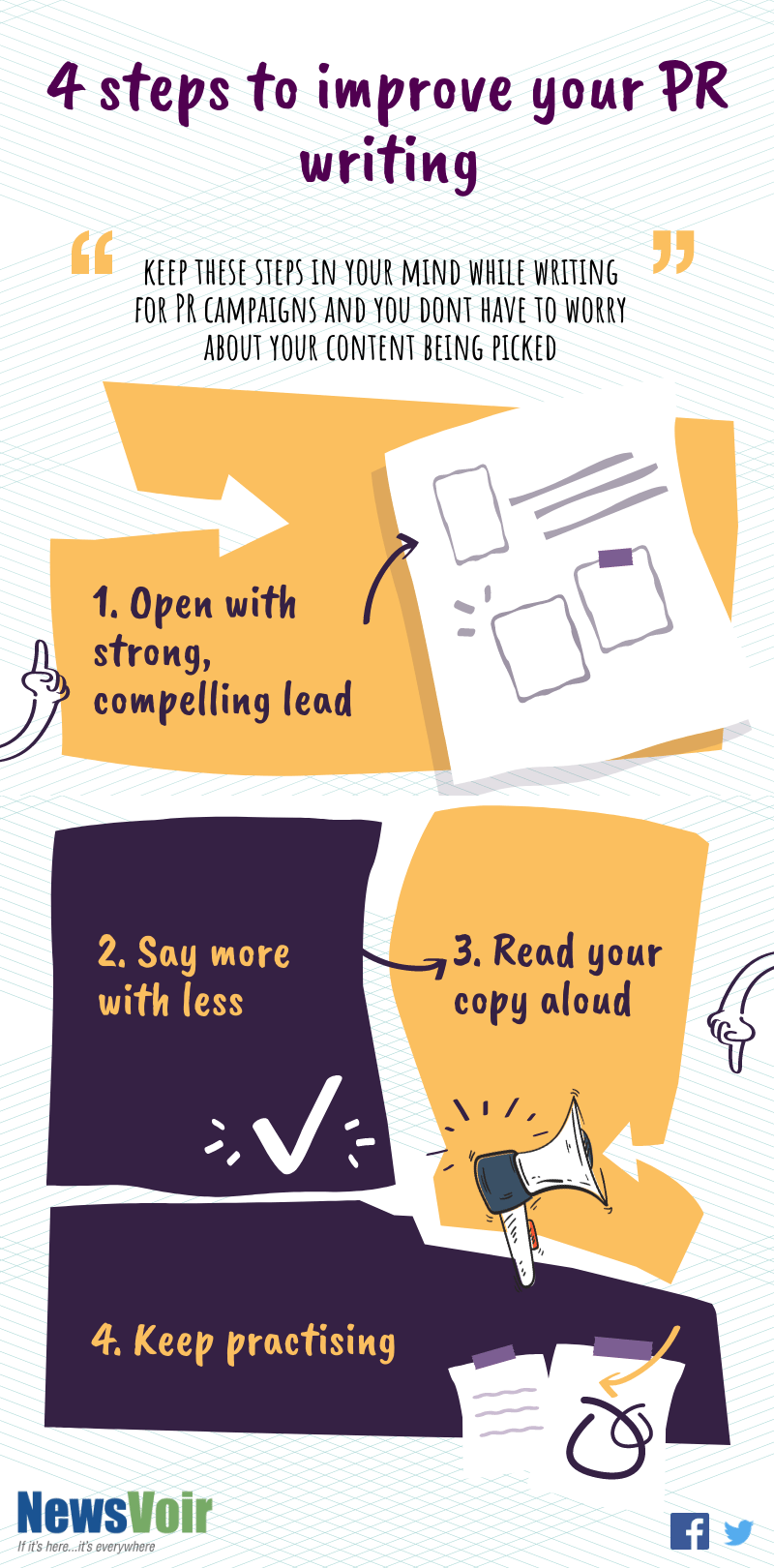
How to Improve Your PR Writing: 4 Essential Tips
1. Open With a Strong, Compelling Lead
The opening paragraph sets the direction for your content. In a press release or media pitch, it should quickly communicate the most important information and give readers a reason to continue.
A useful approach is to consider the five Ws and one H: who, what, when, where, why, and how. Include the details most relevant to the announcement rather than forcing every question into the opening.
For example, instead of beginning with a lengthy company introduction, start with the actual announcement and explain why it matters. You can then provide supporting information, quotes, and background in the following paragraphs.
A strong lead helps journalists and readers understand the main point without searching through unnecessary details.
2. Say More With Fewer Words
Effective PR writing prioritizes clarity over length. Unnecessary fillers, repeated information, complicated sentences, and excessive jargon can make a message harder to understand.
Review every paragraph and ask whether it contributes useful information. Replace vague expressions with specific details, remove repetition, and use straightforward language wherever possible.
For example, instead of writing, “The company is pleased to announce the launch of a new and innovative solution designed to help businesses improve their overall operational efficiency,” you could write, “The company has launched a new solution to help businesses improve operational efficiency.”
The second version communicates the announcement more directly. Concise writing helps readers identify the main message while preserving the information that matters.
3. Read Your Copy Aloud
Reading your content aloud is a simple way to identify awkward sentences, unclear wording, repetition, and unnecessary complexity. A sentence that looks correct on the screen may sound unnatural when spoken.
After completing your first draft, read the entire copy aloud and pay attention to its flow. Check whether the main message is clear, whether paragraphs connect logically, and whether any sentence is difficult to follow.
You should also proofread names, dates, figures, quotations, links, and other factual details. Use spelling and grammar tools as additional support, but do not rely on them to identify every editorial or factual issue.
A final review helps ensure that the content is polished, accurate, and ready to share.
4. Keep Practising
PR writing improves with regular practice, feedback, and revision. Writing different types of content can help you understand how to adapt your message for journalists, business audiences, customers, and other stakeholders.
Study well-written press releases, media pitches, company announcements, and industry articles to understand how strong leads, clear headlines, and concise paragraphs work together.
You can also revisit your previous drafts to identify recurring issues and areas for improvement. Ask colleagues to review your content and consider their feedback before finalizing important communication.
Over time, consistent practice can help you develop a clearer writing style and become more confident in preparing PR content.
PR Writing Best Practices to Follow
Beyond the four essential tips, a few additional practices can help improve the quality and usefulness of your PR content.
Understand Your Audience
Before writing, consider who will read the content and what they need to know. A media pitch should reflect the journalist’s subject area and publication, while a corporate announcement may require more context for customers or business stakeholders.
Understanding your audience helps you choose the right tone, level of detail, and story angle.
Use Clear and Informative Headlines
A headline should communicate the main subject accurately and make the content easy to understand. Avoid vague wording, exaggerated claims, and unnecessary promotional language.
For press releases, the headline should highlight the news rather than simply praise the organization.
Support Claims With Reliable Information
Use accurate facts, verified figures, relevant examples, and properly attributed quotations to support your message. Check all details before publication and avoid claims that cannot be substantiated.
Credible information makes PR content more useful to journalists and helps protect the organization’s reputation.
Maintain a Consistent Brand Voice
Your wording and tone should reflect the organization’s communication style while adapting to the purpose of each piece of content. A formal company statement may require a different tone from a media pitch, but both should communicate the brand’s message consistently.
Edit Before Publishing
Do not treat the first draft as the final version. Review the structure, clarity, factual accuracy, grammar, formatting, and relevance of the content before sharing it.
A structured editing process helps catch avoidable mistakes and ensures that the final copy communicates its message effectively.
Common PR Writing Mistakes to Avoid
Even experienced writers can make mistakes that weaken public relations content. Watch out for these common issues:
Burying the main message: Avoid lengthy introductions that delay the announcement. Put the most important information near the beginning.
Using excessive jargon: Industry terminology may be appropriate for specialist audiences, but unnecessary jargon can make content difficult to understand.
Making unsupported claims: Verify statistics, superlatives, and performance claims before including them in your communication.
Repeating information: Remove sentences and paragraphs that repeat the same point without adding useful context.
Ignoring proofreading: Check spelling, grammar, punctuation, names, dates, and links before publishing or distributing the content.
Writing only for the brand: Focus on why the information matters to the audience instead of relying entirely on promotional messaging.
Conclusion
Improving PR writing requires a combination of clear communication, relevant storytelling, careful editing, and regular practice. Starting with a strong lead, removing unnecessary words, reading content aloud, and continuing to develop your writing skills can help make your communication more effective.
By understanding your audience, verifying information, maintaining a consistent brand voice, and reviewing every draft before publication, you can create PR content that is easier to understand and more useful to journalists and readers.
Frequently Asked Questions
What is PR writing?
PR writing involves creating content for public relations activities, including press releases, media pitches, company announcements, statements, and thought leadership articles. Its purpose is to communicate information clearly and effectively to relevant audiences.
What are the most important PR writing skills?
Important PR writing skills include research, clear and concise writing, storytelling, headline development, fact-checking, editing, and understanding the target audience. The ability to communicate complex information simply is particularly useful.
How can beginners improve their PR writing?
Beginners can improve by studying effective PR content, practising regularly, writing strong opening paragraphs, using straightforward language, and reviewing their work before publication. Feedback from experienced writers can also help identify areas for improvement.
Why is the opening paragraph important in PR writing?
The opening paragraph introduces the main message and helps readers understand why the information matters. A strong opening gives the audience the essential details early and encourages them to continue reading.
How is PR writing different from marketing copywriting?
PR writing generally focuses on communicating news, information, and stories to journalists, audiences, and stakeholders. Marketing copywriting typically focuses more directly on promoting products or services and encouraging a specific response. Both require clear messaging and an understanding of the audience.
More Information
- How to Issue a Press Release: A Complete Guide
- 6 Common Press Release Mistakes and How to Avoid Them
- How to Write Content Journalists Want to Read
- Key Elements of Public Relations: A Complete Guide