Latest News
|
||
New Report Warns of Immediate Climate Risks Across India's 11,000 km CoastlineThe report uses high-resolution 25 x 25 km data to map district-level climate shifts between 2021- 2040 compared to 1960’s baseline | ||
|
May 30, 2026 10:12 IST
|
||
|
Mumbai, Maharashtra, India
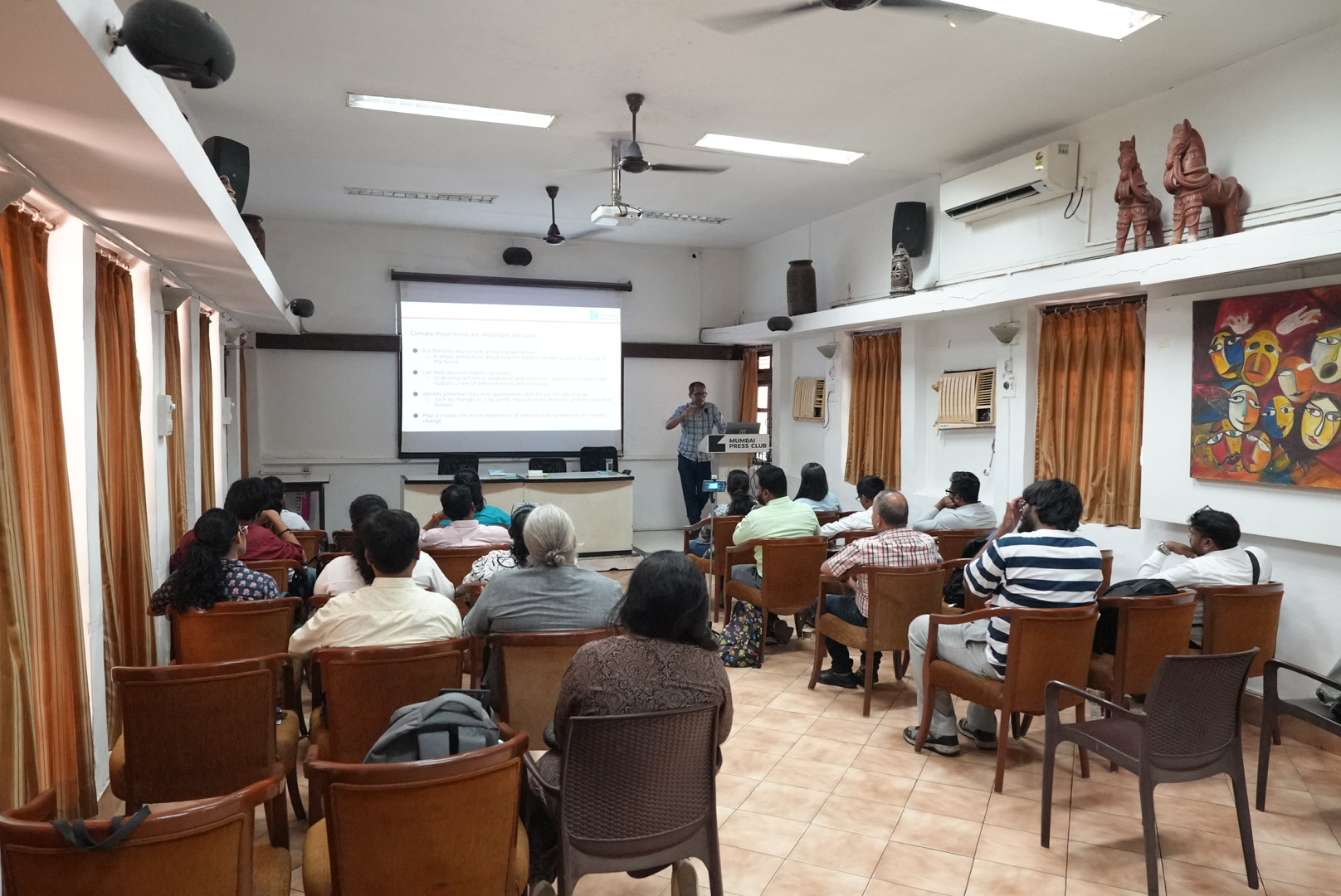
India’s coastal regions are facing an imminent climate crisis that will reshape lives, livelihoods, and ecosystems within the next couple of years, according to the ‘Indian Coastal Region: Climate Projections 2021–2040’ report released by Azim Premji University, Bengaluru.
Santonu Goswami, Professor, School of Climate Change and Sustainability, Azim Premji University, Bengaluru
Focusing on near-term projections (2021-2040) the study provides actionable insights for policymakers and local communities, using CMIP6* model projections corrected for regional bias to improve accuracy. The report warns that the window for adaptation is rapidly narrowing as the 1.5°C warming threshold is expected to be reached across India’s administrative regions in the near future.
“Climate change is not some distant future challenge—it is the reality of today. 2040 is just 14 years away,” said Anurag Behar, CEO, Azim Premji Foundation. “This dataset brings to life the impacts of climate change with much greater immediacy, highlighting how we must restructure our infrastructure and governance to ensure we collectively address this crisis.” The report traces how specific changes—from rising wet-bulb temperatures in Kerala to intensifying monsoons in Maharashtra—are already rendering traditional knowledge systems, like the Nakaih wind calendar, unreliable. It aims to provide the foundational data necessary for local authorities to build district-level resilience.
“The data in this report is a mirror that reflects a reality we can no longer afford to ignore. For decades, we treated climate change as a global abstraction — a problem of polar ice caps and distant centuries. But our findings show that for the Indian coastline, the crisis is hyper-local and immediate. Whether it is the heat stress in Ernakulam or the rising salinity in the Sundarbans, our vulnerability is visible in all aspects of our daily lives. We have a short window of time to move from reactive mitigation to proactive adaptation — we need to craft a future that acknowledges the ecological challenges faced by our nation,” said Harini Nagendra, Director, School of Climate Change and Sustainability, Azim Premji University.
Maharashtra and Gujarat’s coastal regions are entering a period of significant environmental transition, with Suburban Mumbai projected to see summer maximum temperatures rise by 1.3°C, highlighting the growing need for heat-resilient urban planning. This warming is accompanied by a marked intensification of seasonal rainfall; Suburban Mumbai is expected to face almost an additional week (+6 days) of heavy rain, while districts like Surat and Bhavnagar are preparing for Southwest monsoon surges of 23% and 24%, respectively. These shifts are already impacting local livelihoods: for instance, the Koli community in Mumbai reports business losses when unpredictable rain spells disrupt the traditional drying of prawns. By focusing on the immediate 2040 window, the report provides the granular data necessary for the West Coast to safeguard its infrastructure and unique coastal heritage.
About Azim Premji University
Azim Premji University, Bengaluru, was established under the Azim Premji University Act 2010 of the Government of Karnataka. Azim Premji University, Bhopal, was established under the provisions of Madhya Pradesh Niji Vishwa Vidyalaya (Sthapana Avam Sanchalan) Dwitiya Sanshodhan Adhiniyam, 2022. Azim Premji University in Ranchi is being established under the Azim Premji University Act, 2022, enacted by the Government of Jharkhand.
Azim Premji Foundation, the sponsoring body, set up all three Universities as fully philanthropic entities, with a clear social purpose of contributing to the realisation of a just, equitable, humane, and sustainable society.
Note to Editors: ** SSP2-4.5 is the "Middle of the Road" scenario that projects climate impacts based on the world’s current trajectory. It is used here to provide a realistic baseline, showing the immediate risks India's coastline faces if global development and carbon emissions continue at their present pace without drastic changes.
|
||
|
|
|||||
|
|||||
| |||||