Latest News
|
||
World Animal Protection Urges Urgent Action to Transform Food Systems and Tackle Antimicrobial Resistance through Better Animal Welfare | ||
|
Nov 23, 2026 17:20 IST
|
||
|
New Delhi, Delhi, India
World AMR Awareness Week (World Antimicrobial Resistance Awareness Week) is observed annually from 18 to 24 November to raise awareness of drug-resistant infections and promote responsible antimicrobial use across human, animal, plant, and environmental health. For the 2026 observance, the World AMR Awareness Week campaign uses the theme "One Health, One Action: Prevent AMR Now," aligned with the updated Global Action Plan on AMR (2026–2036).
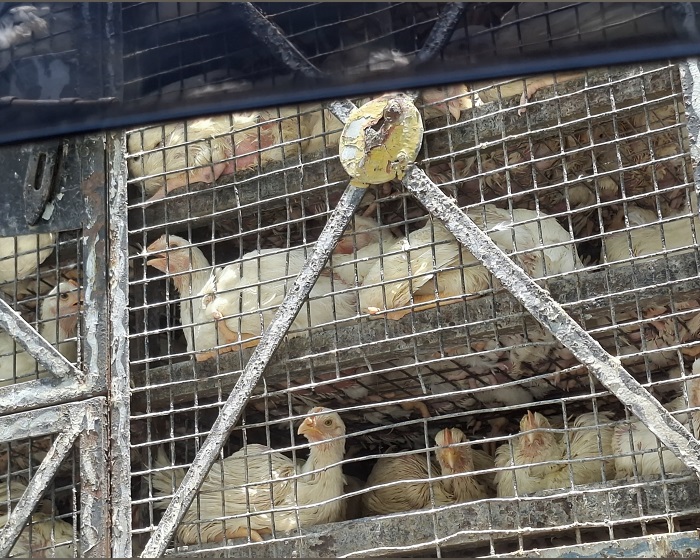
Chickens in factory farm conditions in Delhi photograph by Shubhobroto Ghosh
World AMR Awareness Week (WAAW) serves as a critical annual reminder that human health is inextricably linked to the environment and animal welfare. While public awareness often focuses on the misuse of medicines in human clinics, World Animal Protection highlights a more devastating cause of antimicrobial resistance (AMR), the industrial food system. Factory farming, the commercial exploitation of wildlife, and the resulting contamination of natural ecosystems form a dangerous cocktail that breeds untreatable "superbugs." World Animal Protection has produced a film on this subject named, ‘The Silent Killer,’: youtu.be/zpV_aC_vkKg?si=o6G21c7WjLYorMq8
Globally, approximately three-quarters of all critical antibiotics are not used to treat sick people, but are fed routinely to farmed animals. In commercial factory farms, thousands of animals are crammed into stressful, squalid, and overcrowded cages or pens with no access to natural light. To prevent these animals from dying due to poor immunity caused by severe stress and psychological distress, industrial systems rely on mass prophylaxis that involves dosing entire herds or flocks in their communal feed and water supply systems. According to available research, the vast majority of global antimicrobials in animal agriculture are used for prevention or as artificial growth promoters rather than for targeted, individual medical treatment. This mass, low-dose exposure provides an ideal evolutionary incubator for bacteria to mutate, develop resistance, and transform into lethal superbugs. These resistant pathogens then exit the farm gates and find their place on the meat itself, threatening consumers with hard-to-treat foodborne illnesses worldwide.
World AMR Awareness Week strongly champions the One Health framework, which recognises that human, animal, and environmental health are a single, interconnected system. To halt the rise of superbugs, World Animal Protection argues that society must fundamentally transform global food systems away from intensive confinement that is inherent in factory farming of animals, including cows, pigs, chickens, ducks, turkeys and other animals. Finally, a global shift toward plant-based diets can reduce the overall demand for intensive animal agriculture. Ultimately, safeguarding life-saving antimicrobial medicines requires an urgent end to the cruel practices of factory farming and the exploitation of wildlife. "True global health security cannot be achieved without putting animal welfare at the heart of our food production systems. Intensive farming practices and the irresponsible use of antibiotics pose serious risks to animal health, human health and the environment. We need to move towards more humane, equitable and sustainable food systems that prioritise animal welfare, responsible antibiotic use and a greater shift towards plant-based proteins. In India, World Animal Protection is working with corporates and other stakeholders to integrate these principles into food production practices and supply chains. By making animal welfare an integral part of responsible food production, we can contribute to preventing antimicrobial resistance and building a healthier future for animals, people and the planet," says Gajender Kumar Sharma, Country Lead, World Animal Protection.
For more information, please contact: Gajender Kumar Sharma, Country Lead, World Animal Protection Email: [email protected] Mobile phone: 9313333283
|
||
|
|
||||||||||||||||
|
||||||||||||||||
| ||||||||||||||||